
Jesus only.
When glory walked toward the cross

This is the fifth and final reflection in a series based on the season of Epiphany.
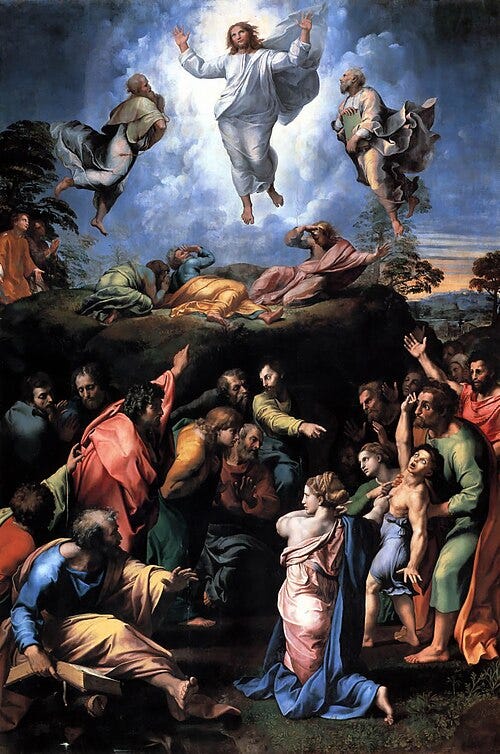
The Transfiguration is one of the most mysterious and theologically dense moments in the Gospels. In just a handful of verses, mountains, prophets, glory, and the voice of God converge. It is not an incidental scene. It is a revelation.
Throughout this season of Epiphany, we have traced what it means for something once hidden to come into view. We followed the magi as they journeyed toward a baby King and bowed before Him with costly gifts — the Messiah revealed to the nations. We stood at the Jordan as the Spirit descended and the Father declared, “This is my beloved Son.” We heard Jesus commission His followers to shine as reflections of His light in a darkened world.
The Light has come. And we have seen Him.
And now we come to the climax of that revelation — the moment when the veil is peeled back and the divine identity of Jesus is unveiled in radiant glory.
Six days after Peter confesses, “You are the Christ, the Son of the living God,” and six days after he recoils at the thought of a suffering Messiah — after Jesus calls him Satan and summons His disciples to take up their cross — Jesus takes Peter, James, and John up a high mountain by themselves.
And he was transfigured before them…
Matthew 17:2
The word Matthew uses is metamorphōthē — from which we get metamorphosis. A transformation. A revealing.
The disciples watch as Jesus’ appearance morphs before their eyes. The Gospel writers strain for language:
“His face was altered, and His clothes became dazzling white…” — Luke
“His face shone like the sun, and His clothes became white as light.” — Matthew
“His clothes became radiant, intensely white, as no one on earth could bleach them.” — Mark

When God appears in the Old Testament, His glory is described in brilliant light and consuming fire.
“As I looked, thrones were placed, and the Ancient of Days took His seat; His clothing was white as snow, and the hair of His head like pure wool; His throne was fiery flames.”
— Daniel 7“From His waist upward I saw as it were gleaming metal, like the appearance of fire… and there was brightness around Him.” — Ezekiel 1
The Old Testament builds an accumulating pattern: light, fire, radiance, weight. By the time we reach this mountain, the imagery is not new — but now it is intensified.
This is not merely a prophet bathed in light. This is the glory Scripture reserves for Yahweh, God alone.
The man they have walked beside, shared meals with, listened to on dusty roads — now stands before them emanating the Light itself.
This is not a new Jesus. It is the veil lifted.
The glory is intrinsic, not borrowed.
The Hebrew word for glory, kavod, carries the sense of weight — substance, gravity, worth. The glory of God encompasses is not merely honor and respect, but a sense of substance and importance. It causes trembling. It presses men to the ground.
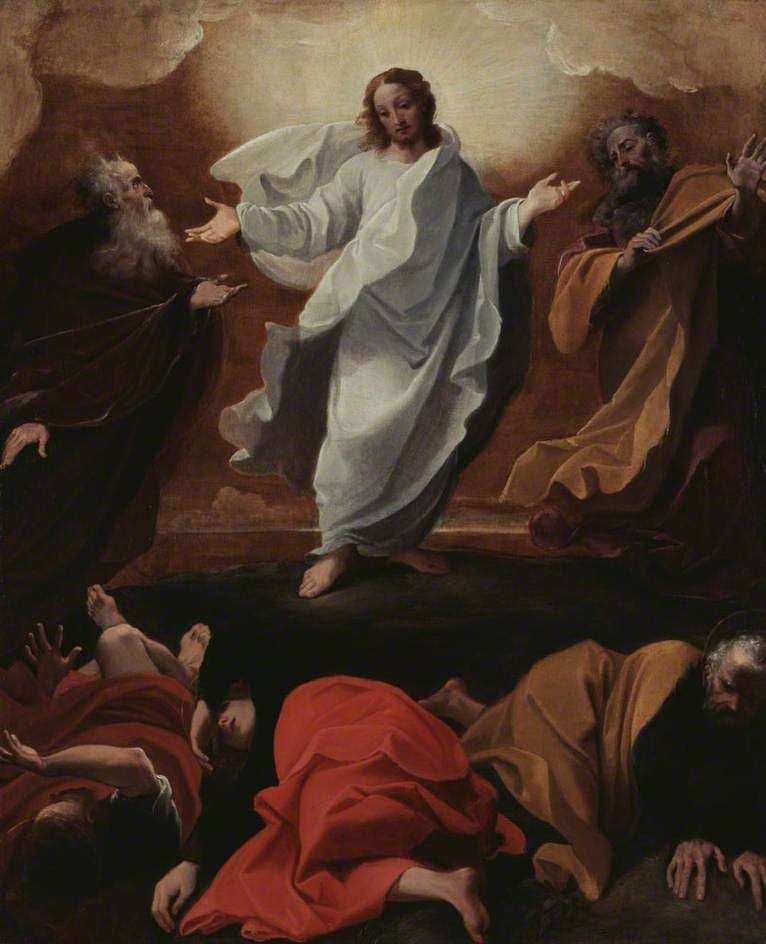
And that is exactly what happens.
The disciples are experiencing the holy otherness of God — radiant, overwhelming, beyond containment or explanation.
And then, as if the moment were not already beyond comprehension, Moses and Elijah appear. The Law and the Prophets stand bearing witness to the Son. Luke tells us they speak with Him about His “departure” — His exodus — in Jerusalem.
The one who once asked to see God’s glory and was shielded in the cleft of the rock now stands in unveiled radiance before Him. The prophet who encountered God in a whisper now sees fulfillment in blazing light.
The story of Israel converges here. The greatest question in human history is answered here.
And Peter, stunned and overwhelmed, speaks.
“It is good that we are here.”
He proposes tents — structures — something to contain the glory. Where do you put something like this? In a shelter, perhaps.
Preserve it. Honor it. Keep it on the mountain.
But while the words are stumbling out of Peter’s lips, a bright cloud overshadows them.
“This is my beloved Son, with whom I am well pleased; listen to Him.”
The cloud once filled the tabernacle. It once filled the temple so that priests could not stand to minister. That glory now overshadows the Son.
The dwelling place of God is no longer stone.
It is a Person.
At the sound of the voice, the disciples collapse in fear.
And then — a hand touches them.
“Rise and have no fear.”
The hand that upholds the universe rests on trembling shoulders. The One whose glory made Isaiah cry, “Woe is me,” stoops in tenderness.
This is the glory of God — terrifying in majesty,
gentle in mercy.
And when they lift their eyes, the cloud is gone. The voice is silent. Moses and Elijah have departed.
“They saw no one but Jesus only.”
Jesus alone.
The Law and the Prophets bore witness, but they cannot accomplish what He will accomplish. As Hebrews tells us:
Long ago, at many times and in many ways, God spoke to our fathers by the prophets, but in these last days he has spoken to us by his son…
—Hebrews 1:1
Jesus is the final word. Jesus only. There is no need for more revelation. He is enough.
The disciples saw the veil lifted. They witnessed the glory of God in human flesh. They stood at the epicenter of the most astonishing revelation imaginable. And their instinct was to stay there — to build, to preserve, to linger.
But Jesus came down the mountain.
He did not remain in brilliance. He did not summon crowds to witness it. He did not weaponize it for influence or dominance.1 The radiance was revealed to the few — and then He chose the road of humiliation for the many.
Glory does not eliminate the valley.
It enters it.
As they descended, they were immediately met with chaos: a demon-oppressed boy, desperate need, powerless disciples. The Law could not fix that. The Prophets could not fix that. A spectacle could not fix that.
Jesus only.
We cannot read the Transfiguration apart from the cross. The mountain is framed by Jesus’ repeated predictions of suffering and death. That placement is not arbitrary; it is revelatory.
The glory unveiled on the mountain is the glory that will walk to Jerusalem.
The One radiant with glory did not cling to the mountain but poured Himself out in obedience and self-giving love.
This is not diminished glory.
This is the glory of God on display.
Anyone who has seen me has seen the Father…
—John 14:9
The mountain reveals who He is.
The cross reveals what that means.
What kind of God unveils infinite radiance — and then walks down the mountain into violence, sickness, and death?
What kind of God touches terrified men instead of leaving them crushed by holiness?
What kind of God chooses solidarity with those who will deny Him, abandon Him, and crucify Him?
I am writing this on the heels of a difficult couple of weeks. A bomb threat at the school my husband leads and my son attends. Two trips to the ER with our very sick two-year-old struggling to breathe. The sudden death of a neighbor and dear friend. We are in the valley.
And that is precisely why the Transfiguration feels incredible bright.
We do not worship a God who dazzles from a distance. We worship a God who descends into the mess — the mess we made — and inhabits it with tenderness and compassion. He comes in purity and touches the impure. He comes in strength and stoops in mercy.
We may long for mountain glory on display.
But what we need is valley glory.
Today is Ash Wednesday — the turning of Epiphany toward Lent. We remember that we are dust, and to dust we shall return. Having seen the veil lifted, we follow the One who took on our dust, our sin, though He did not have to, and carried it to the cross.
We have seen the veil lifted.
We have seen the glory unveiled in the Son.
If this is who Jesus is — radiant, sovereign, and yet descending in self-giving love — what does it mean to follow Him?
When the mountain clears and the brilliance subsides, is Jesus alone enough for you?
Are you listening to Him — especially when He speaks of surrender, suffering, and the cross?
Where are you tempted to preserve moments of clarity instead of obeying Him in the valley?
It means we cannot remain on the mountain. We heed the voice spoken from the cloud:
“This is my beloved son with whom I am well pleased. Listen to Him.”
We listen.
We obey.
As He came down, so do we.
As He entered the world in love, so do we.
The Transfiguration reveals the radiant otherness of the Son — and then shows that same glory descending in humble, self-giving love.
When the cloud lifts and the brilliance subsides, Jesus only remains.
And He is enough.
If this reflection helped you see Christ more clearly, would you consider sharing it? Epiphany is about light revealed — and sometimes we reflect that light simply by passing it on.
If you’d like to support this work, you can subscribe or buy me a coffee. Your support makes space for thoughtful, Scripture-centered writing to continue.
“Who though He was in the form of God, did not count equality with God a thing to be grasped, but emptied himself, by taking the form of a servant, being born in the likeness of men. And being found in human form, he humbled himself by becoming obedient to the point of death, even death on a cross.”
—Phil. 2:6-8
This is stunning. You help us feel the weight of glory not as spectacle, but as revelation. The Transfiguration does not present a different Jesus; it unveils who He has always been — the radiance of God Himself. Kavod with substance and gravity, glory that brings trembling and worship.
I’m especially moved by the tenderness within the terror of holiness: the hand that upholds the universe resting on trembling shoulders. The disciples cannot stay on the mountain, and neither can we. Christ descends, because glory does not avoid the valley, it enters it.
When the cloud lifts and the voices fade, one truth remains: Jesus only. Sufficient. Final. Enough.
The mountain reveals who He is. The cross reveals the shape of His glory, and the life we are called to follow.
Thank you!! Loved this!
This is so theologically rich but accessibly reflective, Julia. Beautiful writing. It made me think much of Jesus. Thank you for that.